Heel-to-toe drop is the height differential between a running shoe's heel and forefoot midsole, measured in millimeters without the insole. Road running shoes typically span from 0mm to 12mm offsets, where high-drop geometries (8–12mm) shift kinetic impact toward the knees and hips, while low-drop setups (0–4mm) load the Achilles tendon and calf complex.
Altering drop does not reduce the total gravitational impact forces traveling into the body during running gait. Instead, drop acts as a mechanical lever arm: it redistributes peak joint moments along the kinetic chain.
1. How Heel-to-Toe Drop is Measured
Manufacturer spec sheets publish nominal drop values calculated from computer-aided design (CAD) blueprints. In standardized footwear evaluation protocols (governed by World Athletics and ASTM guidelines), stack heights are measured at exact anatomical coordinates:
- Heel Stack Measurement: Taken at 12% of the internal shoe length from the rearmost heel point along the center longitudinal axis.
- Forefoot Stack Measurement: Taken at 75% of the shoe length from the rear, directly under the third metatarsal head.
- Insole Normalization: Factory sockliners are accounted for under standard contact pressure.
- Calculated Drop: Drop = Measured Total Heel Stack − Measured Total Forefoot Stack.
Heel Stack (12% Axis) ────┐
                          ▼
             ┌───────────────────────────────┐
             │            MIDSOLE            │
             └───────────────────────────────┘
                                ▲
                                └──── Forefoot Stack (75% Axis)

        True Mechanical Drop = [Heel Stack] − [Forefoot Stack]
In practice, real-world caliper measurements can deviate by 1.0mm to 2.5mm from brand nominal claims due to insole compression and outsole lug profiles.
2. The Biomechanical Tradeoff: Knees vs. Achilles
The human lower extremity functions as a kinetic chain of compliant springs and levers. When your foot strikes the ground, the impact force must be absorbed and dissipated across four primary anatomical structures: the foot arch/plantar fascia, the Achilles tendon/calf complex, the patellofemoral joint (knee), and the hip/lower back.
Runner Takeaway: Runners recovering from patellofemoral pain syndrome or quadriceps tendinopathy benefit from lower drops (4–6mm), which shorten stride length and increase cadence. Conversely, runners managing Achilles tendinopathy or plantar fasciitis should prioritize traditional 10–12mm offsets to reduce eccentric calf elongation.
High-Drop Footwear (8mm to 12mm)
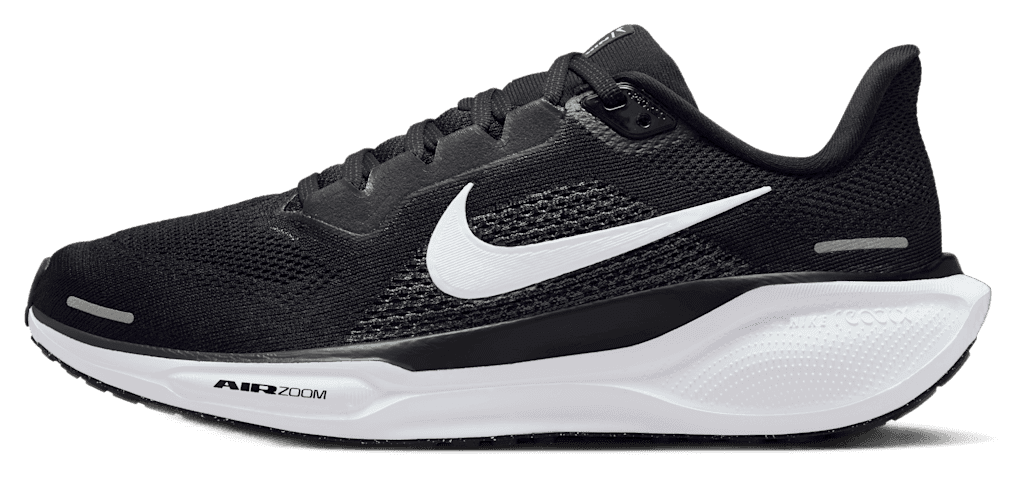
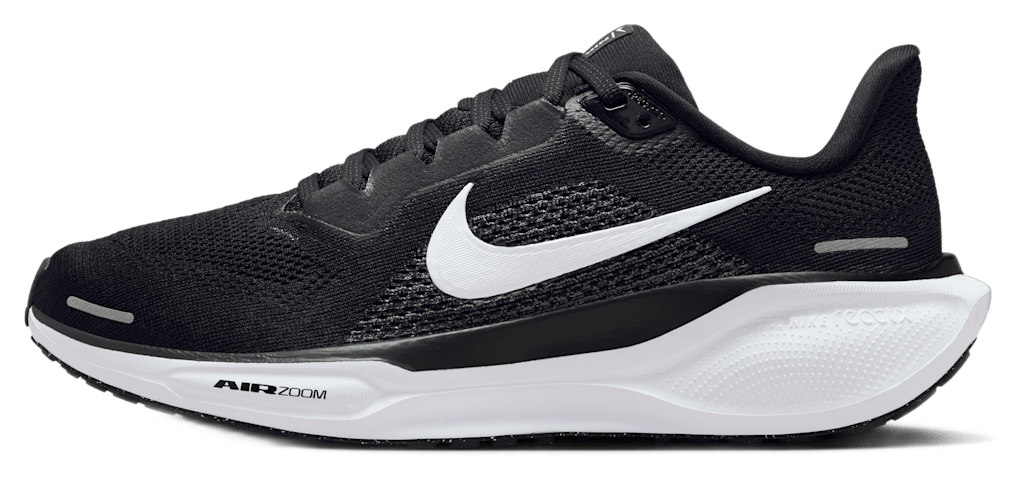
Shoes like the Nike Pegasus 41 performance audit (verified 10mm drop) elevate the calcaneus relative to the metatarsals:
- Kinetic Effect: High heel elevation reduces the ankle dorsiflexion range of motion required during stance phase.
- Anatomical Relief: Reduces eccentric peak strain on the Achilles tendon and gastrocnemius-soleus complex by approximately 10% to 14%.
- Kinetic Tradeoff: Encourages a more pronounced heel-strike strike pattern with an extended knee angle at initial contact, increasing peak patellofemoral joint loading and quadriceps braking forces.
Low-Drop Footwear (0mm to 4mm)
Low-offset chassis keep the foot on an anatomically horizontal plane:
- Kinetic Effect: Promotes a midfoot or forefoot initial contact point directly beneath the runner's center of mass.
- Anatomical Relief: Reduces peak knee flexion moments and decreases patellofemoral contact pressure.
- Kinetic Tradeoff: Demands an additional 3° to 5° of ankle dorsiflexion, transferring ground reaction forces directly into the Achilles tendon and calf muscles.
3. Stack & Drop Specification Comparison
To illustrate how drop interacts with overall midsole stack volume, consider three prominent daily trainers in the SoleVersus database:
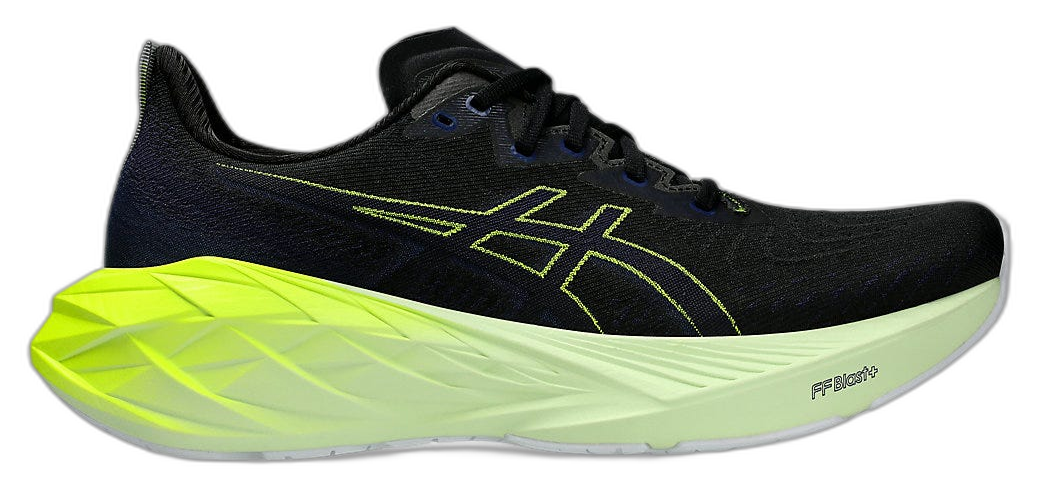
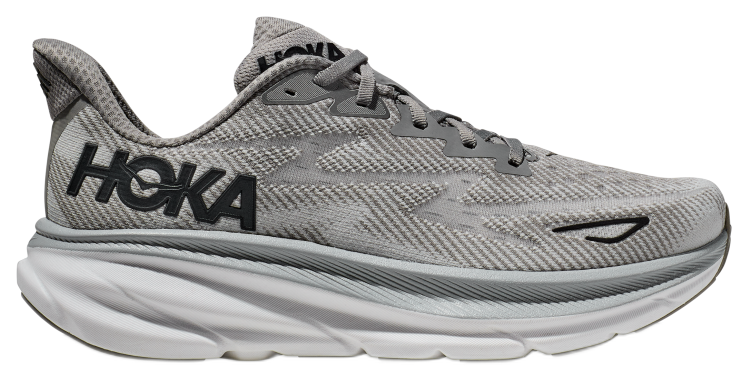
| Shoe Model | Category | Stated Weight | Heel Stack | Forefoot Stack | Verified Drop | Decisive Kinetic Profile |
|---|---|---|---|---|---|---|
| Nike Pegasus 41 | Daily Workhorse | 281g | 37.0mm | 27.0mm | 10mm | High-drop knee loading, maximal Achilles protection |
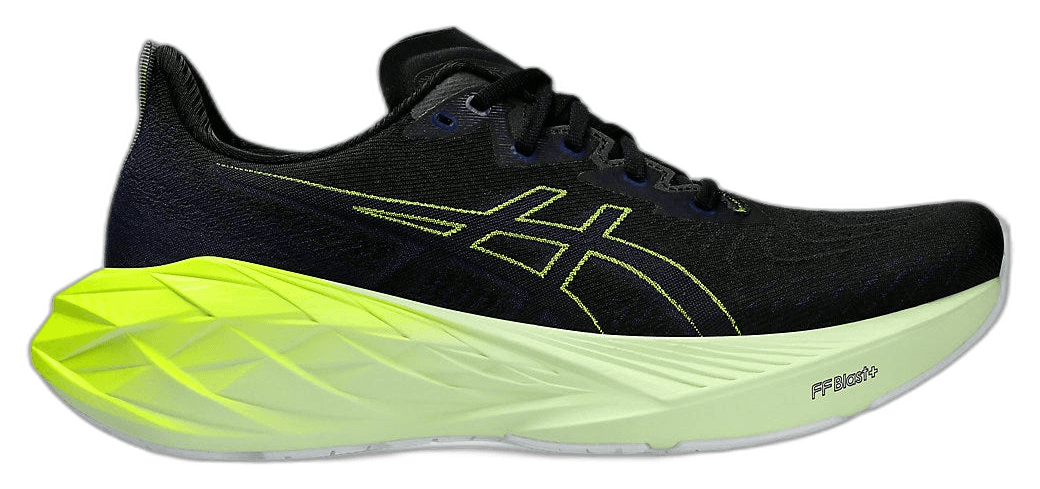
| ASICS Novablast 4 | Versatile Mileage | 260g | 41.5mm | 33.5mm | 8mm | Balanced offset with high-energy trampoline rebound |
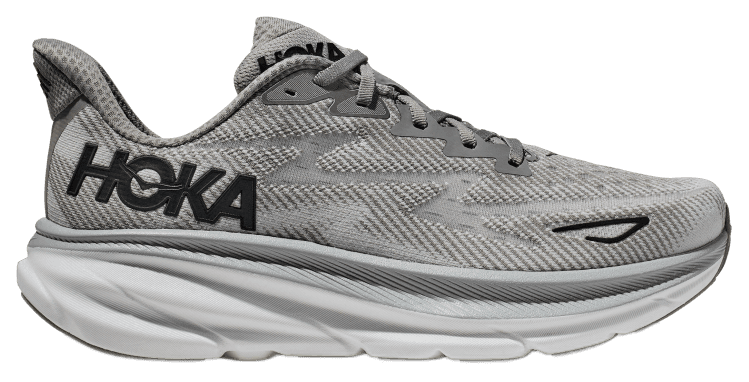
| HOKA Clifton 9 | Max Cushion | 248g | 32.0mm | 27.0mm | 5mm | Low-drop rocker transition, reduced knee impact |
For a head-to-head comparison of stack heights, energy rebound, and stability between these specific shoes, consult our showdowns:
- Review the comprehensive Novablast 4 vs Pegasus 41 head-to-head comparison for detailed 8-axis radar overlays.
- Compare cushioning geometry in our Clifton 9 vs Pegasus 41 head-to-head showdown.
4. How to Match Drop to Your Injury Profile
Choosing the optimal heel-to-toe drop is not about finding the "fastest" configuration—it is an exercise in targeted joint-loading management.
- Patellofemoral Pain (Runner's Knee): Choose 4mm to 6mm drop. Lowering heel elevation helps bring foot touchdown closer to your center of mass, decreasing the knee flexion lever arm.
- Achilles Tendinitis & Calf Tightness: Choose 10mm to 12mm drop. Elevating the heel prevents excessive eccentric stretch on the tendon during late stance phase.
- Plantar Fasciitis: Choose 8mm to 10mm drop with a rigid rocker. A moderate-to-high drop combined with an early-stage toe rocker reduces mechanical tensile load on the plantar aponeurosis.
- Hip Impingement or Low Back Soreness: Choose 5mm to 8mm drop. Moderate offsets discourage excessive lumbar anterior pelvic tilt during terminal stance.
5. Transition Protocol: Avoiding the Achilles Trap
Sudden drops in footwear offset are a primary cause of acute Achilles tendinopathy in distance runners. If you currently train in a 10mm shoe like the Nike Pegasus 41 and wish to transition to a 4mm or 5mm model like the HOKA Clifton 9, follow this 4-week adaptation protocol:
- Week 1: Wear the low-drop shoe exclusively on 1 short recovery run (no more than 20% of weekly volume). Perform eccentric heel drops on a step daily.
- Week 2: Increase low-drop usage to 2 easy runs (35% of weekly volume). Keep all tempo and long runs in your traditional high-drop footwear.
- Week 3: Transition up to 50% of mileage to the lower drop, including mid-week aerobic runs.
- Week 4: If Achilles morning stiffness is absent, incorporate the low-drop shoe into your weekend long run.
Frequently Asked Questions
What is the difference between stack height and heel-to-toe drop?
Stack height is the total vertical distance between your foot and the road, including outsole rubber and midsole foam. Heel-to-toe drop is the mathematical difference between the heel stack and the forefoot stack. A shoe can have a high stack height (e.g., 40mm) with a low drop (4mm).
Does zero-drop footwear make you run faster?
Zero-drop footwear does not automatically improve running speed or running economy. While it encourages a midfoot strike, metabolic efficiency is primarily governed by midsole energy return, shoe weight, and longitudinal bending stiffness rather than drop alone.
Can changing shoe drop cure knee pain?
Switching to a lower drop shoe (4mm to 6mm) reduces peak joint moments at the knee by shortening stride length and reducing heel impact braking forces. However, it transfers that mechanical workload to the Achilles tendon and calf muscles, which must be strong enough to absorb the extra stress.