When browsing technical shoe specs, heel-to-toe drop (often simply called "drop" or "offset") is one of the most cited yet misunderstood metrics in footwear engineering. Stated in millimeters, drop represents the mechanical height differential between the shoe's heel cushion and its forefoot stack.
A shoe with a 37mm heel and a 27mm forefoot features a 10mm drop. Conversely, a chassis with 32mm in the rear and 27mm under the metatarsals features a 5mm drop.
While marketing copy often frames drop as a measure of "cushioning" or "speed," mechanical reality is different: drop is a joint-loading lever. Altering drop does not eliminate impact force—it merely shifts where that force travels through your kinetic chain.
1. How Heel-to-Toe Drop is Measured
Official manufacturer spec sheets frequently publish nominal drop values calculated from computer-aided design (CAD) blueprints. In standardized footwear evaluation protocols (governed by World Athletics and ASTM guidelines), stack heights are measured at exact anatomical coordinates:
- Heel measurement point: Located 12% of internal shoe length forward from the rear inside edge.
- Forefoot measurement point: Located 75% of internal shoe length forward from the rear inside edge.
+--------------------------------------------------------------+
|            ANATOMICAL MEASUREMENT PROFILE                    |
|                                                              |
|        Heel Stack (12%)                 Forefoot Stack (75%) |
|              |                                   |           |
|              v                                   v           |
|         +----------+                       +-----------+     |
|         |   37mm   |                       |   27mm    |     |
|         +----------+                       +-----------+     |
|              \                                   /           |
|               +----------> 10mm DROP <----------+            |
+--------------------------------------------------------------+
Under running impact, dynamic under-foot drop shifts under compression: a soft PEBA foam compresses deeper under heel strike than a firmer EVA foam, momentarily steepening or flattening the effective ramp angle during the stance phase.
2. High Drop (10mm – 12mm): Knee-Dominant & Heel-Strike Bias
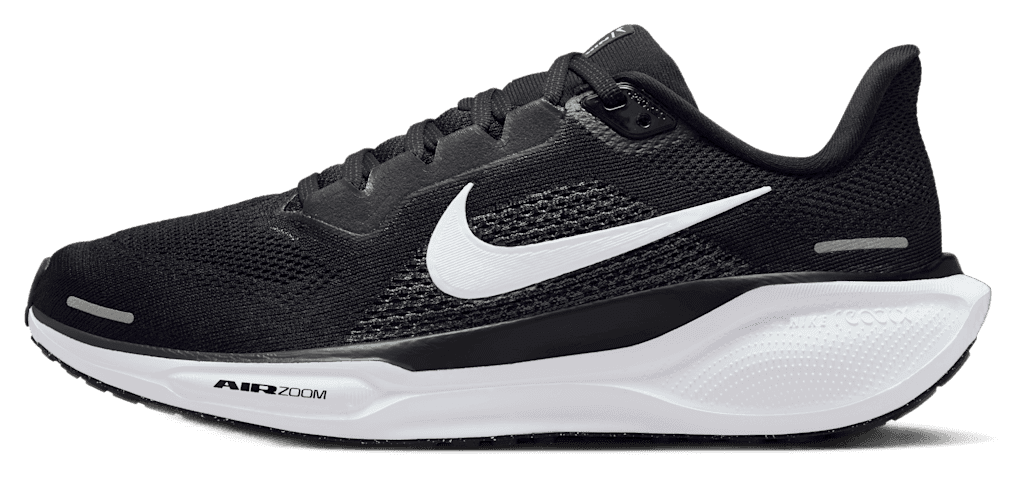
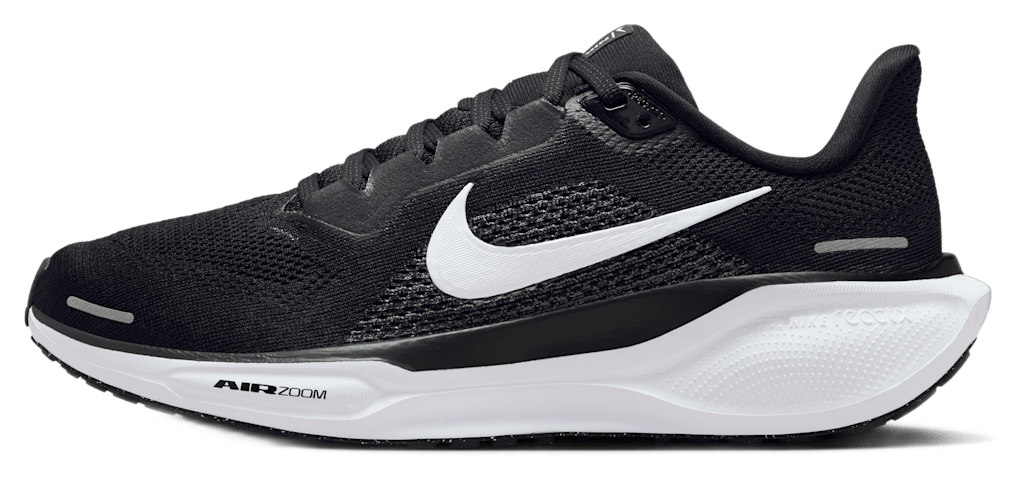
High-drop shoes are the traditional geometry of modern running shoes, popularized in the 1970s and still standard across many high-mileage workhorses like the Nike Air Zoom Pegasus 41 (10mm drop; 37mm heel / 27mm forefoot).
Biomechanical Impact:
- Kinetic Path: Elevating the heel shortens the distance your heel must travel to contact the ground. This promotes an earlier initial heel strike and reduces the range of motion required at the ankle joint.
- Tendon Relief: High drop markedly reduces strain on the Achilles tendon and the plantar fascia.
- Load Shift: Forces are transferred upward into the knee joint (patellofemoral complex) and hip extensors.
Runner Takeaway: If you have a history of Achilles tendinitis, tight calves, or plantar fasciitis, high-drop shoes (9mm–12mm) provide immediate mechanical unloading of the lower leg.
3. Mid Drop (7mm – 9mm): The Versatile Neutral Sweet Spot
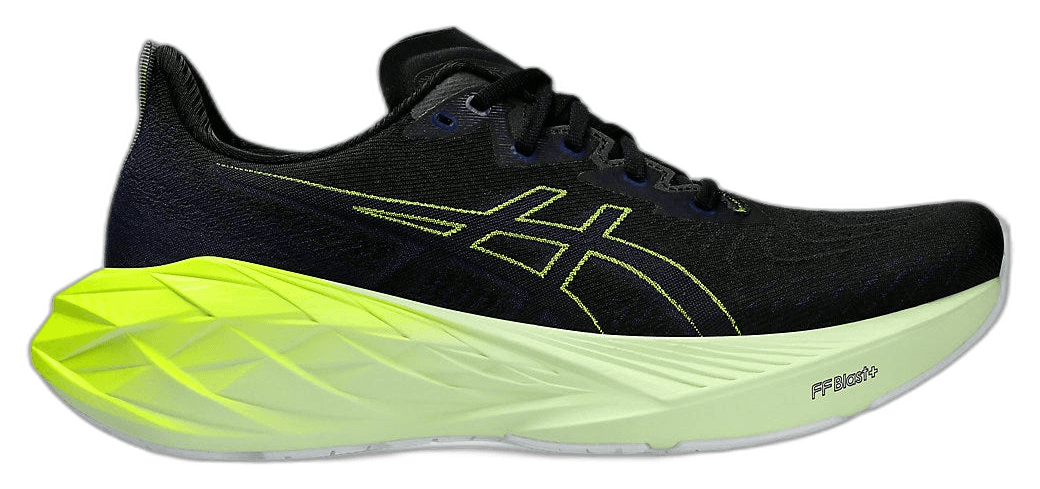
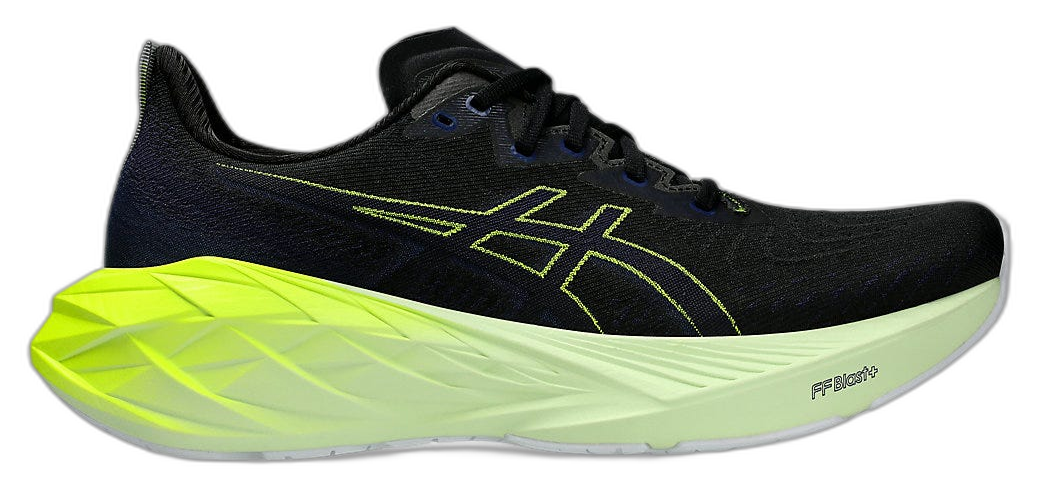
Mid-drop footwear has emerged as the modern consensus for daily training and performance shoes, exemplified by the ASICS Novablast 4 (8mm drop; 41.5mm heel / 33.5mm forefoot).
Biomechanical Impact:
- Kinetic Path: Provides enough heel elevation to protect the Achilles during late-run fatigue when form breaks down, while remaining shallow enough to allow natural midfoot loading during uptempo strides.
- Load Distribution: Balances shock absorption evenly between the lower leg muscles (gastrocnemius, soleus) and the upper leg stabilizers (quadriceps, hamstrings).
Runner Takeaway: For runners without chronic joint issues who incorporate varied paces—from recovery jogs to threshold tempos—a 7mm–9mm drop offers the most forgiving multi-pace mechanical envelope.
4. Low Drop (4mm – 6mm): Foot-Dominant & Achilles Loading
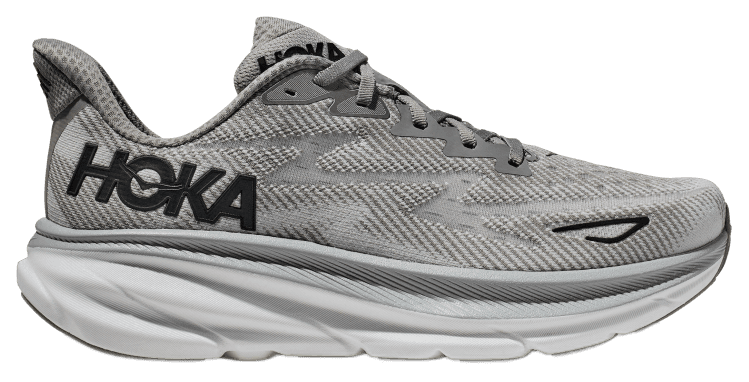
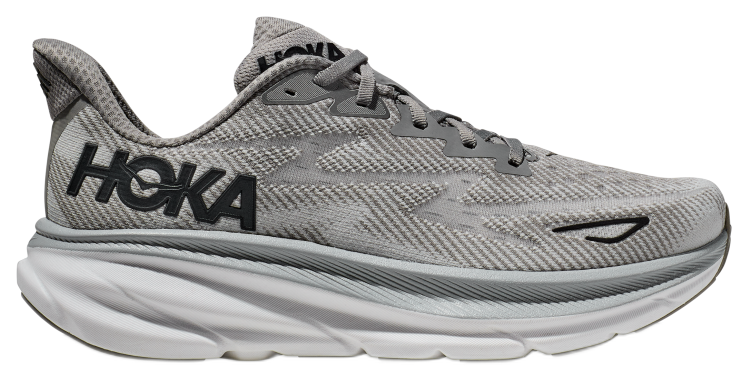
Low-drop geometries were popularized by minimalist movements and maximalist pioneers like HOKA, seen clearly in the HOKA Clifton 9 (5mm drop; 32mm heel / 27mm forefoot).
Biomechanical Impact:
- Kinetic Path: With the heel nearly level with the ball of the foot, the foot strikes more parallel to the surface. This encourages a midfoot or forefoot landing zone directly beneath your center of mass.
- Knee Relief: By increasing ankle dorsiflexion, impact forces are absorbed by the calf-Achilles complex, significantly reducing peak braking forces and pressure on the patella.
- Load Shift: Substantially increases the eccentric workload demand placed on the calves, Achilles tendon, and soleus.
Runner Takeaway: Runners struggling with runner's knee (patellofemoral pain syndrome) often find low-drop shoes therapeutic. However, transitioning abruptly from a 10mm shoe to a 4mm shoe without conditioning can trigger severe calf tightness or Achilles inflammation.
5. Drop Comparison Matrix: How the Specs Stack Up
Here is how three of 2026's most popular daily trainers compare across verified specifications:
| Shoe Model | Verified Heel Stack | Verified Forefoot Stack | Heel-to-Toe Drop | Primary Kinetic Target |
|---|---|---|---|---|
| Nike Pegasus 41 | 37.0 mm | 27.0 mm | 10 mm | Achilles Unloading / Knee-Biased |
| ASICS Novablast 4 | 41.5 mm | 33.5 mm | 8 mm | Balanced Kinetic Distribution |
| HOKA Clifton 9 | 32.0 mm | 27.0 mm | 5 mm | Knee Unloading / Calf-Biased |
6. How to Choose the Right Drop for Your Rotation
Selecting heel drop should not be based on trend or aesthetic; it should be aligned with your personal injury history and gait characteristics:
Choose High Drop (9mm – 12mm) if:
- You are a pronounced rearfoot striker.
- You experience recurring Achilles stiffness, tight calves, or Haglund's deformity.
- You prefer an aggressive roll-forward sensation into toe-off.
Choose Mid Drop (7mm – 9mm) if:
- You want one daily trainer for mixed paces and daily mileage.
- You alternate between heel-striking on recovery runs and midfoot striking on intervals.
- You are unsure of your gait mechanics and need maximum margin for error.
Choose Low Drop (4mm – 6mm) if:
- You suffer from anterior knee pain or patellar tendinitis.
- You naturally strike midfoot or forefoot and dislike excessive heel bulk catching the ground early.
- You have conditioned, resilient calves and Achilles tendons.
Explore our head-to-head showdowns below to see how these differing drop profiles translate into measured rebound, stability scores, and road test verdicts.